
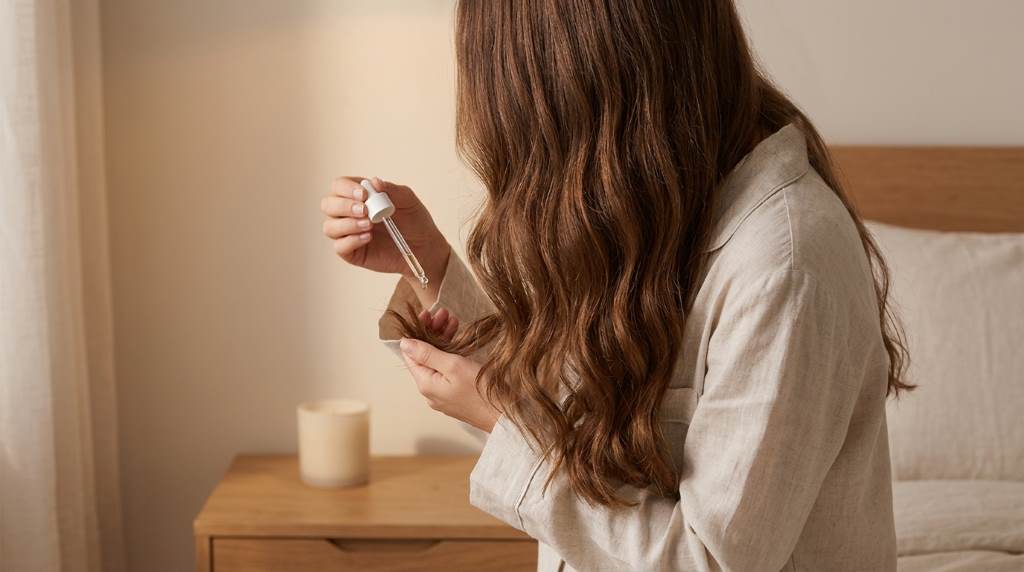
The best way to sleep with long hair involves reducing friction, tension, tangling, and moisture loss overnight. Loosely braid or twist your hair, then protect it with a silk or satin pillowcase or bonnet. Hair grows about half an inch monthly, so protecting those fragile lengths helps preserve months of growth. Moreover, people can shed roughly 50 to 100 hairs daily, making gentle nighttime handling especially important.
Why Long Hair Breaks More Easily Overnight
Long hair carries more exposed length, which increases opportunities for friction against pillows, sheets, clothing, and skin. Therefore, even healthy strands can develop weak spots when nightly movement repeatedly stresses the cuticle.
Hair also becomes vulnerable when you toss, turn, or sleep with tangled strands. Consequently, small knots can tighten overnight and require aggressive brushing the following morning.
Before changing your routine, consider these common nighttime causes:
- Rough pillow fabrics create repeated friction against the hair.
- Loose strands rub together while you move during sleep.
- Tight hairstyles place continuous tension on the roots.
- Wet hair stretches more easily and can suffer mechanical damage.
- Dry ends become brittle and snap during nighttime movement.
- Metal accessories can catch, pinch, or weaken individual strands.
Good nighttime care also complements broader reasons to care hair habits throughout your daily routine. Ultimately, preventing breakage requires consistent protection rather than one occasional treatment.

Choose The Right Sleep Hairstyle For Long Hair
Your hairstyle should secure the lengths without pulling tightly against your scalp. A loose braid usually offers the best balance between control, comfort, and reduced tangling.
Loose Braid
Start with completely or mostly dry hair and gently remove existing tangles. Then create one loose braid beginning around the nape instead of tightly securing the roots.
Use a soft fabric scrunchie near the end of the braid. Avoid rubber bands because their grip can create concentrated pressure and friction.
A loose braid also works well for naturally wavy hair. However, avoid braiding wet hair tightly because prolonged moisture and tension can increase mechanical stress.
Loose Low Bun
A loose low bun suits people who dislike sleeping with a braid. Gather your hair gently near the nape, twist it loosely, and secure it with a soft scrunchie.
Keep the bun relaxed rather than compact and tight. Otherwise, repeated tension can stress the same sections every night.
Loose Twist
A simple two-strand twist can reduce tangling without creating substantial tension. This option works particularly well for long, textured, or easily tangled hair.
Secure the twist loosely and keep the ends protected. If your ends remain exposed, tuck them gently inside the twist without forcing them.
When To Leave Hair Down
Some people prefer sleeping with their hair completely loose. This approach can work when your hair rarely tangles and your pillow surface creates minimal friction.
Nevertheless, long hair usually benefits from gentle containment. A relaxed style reduces movement while preventing the tight tension associated with ponytails and compact buns.
If you regularly struggle with knots, consider using popular hair care apps to track routines and identify patterns. Consistency matters more than finding a complicated nighttime technique.
Use Silk Or Satin To Reduce Nighttime Friction
The surface surrounding your hair matters almost as much as your hairstyle. Silk and satin generally create a smoother sleeping surface than many conventional cotton fabrics.
When hair slides more easily, strands experience less rubbing during normal nighttime movement. Therefore, switching your pillowcase can complement a protective hairstyle without requiring additional products.
Silk Pillowcase
Silk provides a smooth surface and naturally feels gentle against hair and skin. However, quality varies, so look for tightly woven fabric with durable construction.
Wash your silk pillowcase according to its care instructions. A dirty pillowcase can accumulate oils, skincare products, and debris that transfer onto your hair.
Satin Pillowcase
Satin describes a type of weave rather than one specific fiber. Therefore, satin pillowcases can use synthetic materials while still providing a smooth surface.
Choose a satin pillowcase that feels slippery without feeling excessively rough. Replace damaged fabric because snags can create unwanted friction against your strands.
Silk Or Satin Bonnet
A bonnet offers another layer of protection when your hair moves extensively during sleep. Choose a comfortable size that holds your hair without compressing your head.
Place your hair inside gently rather than stuffing it into a tight bundle. Adjust the bonnet edge if it leaves deep marks around your hairline.
Prepare Your Hair Before Bed
Your nighttime routine should begin before you get into bed. A few gentle preparation steps can prevent tangles from becoming larger problems overnight.
Detangle From Ends Upward
Use your fingers or a wide-tooth comb to remove knots gradually. Begin at the ends, then move upward toward the middle and roots.
This method reduces the force required to remove tangles. Consequently, fewer strands experience unnecessary pulling during your evening routine.
Apply Lightweight Moisture
Dry ends often need additional conditioning before bedtime. Apply a small amount of lightweight leave-in conditioner or hair oil to the lengths.
Focus primarily on the mid-lengths and ends rather than saturating the scalp. Too much product can transfer onto bedding and leave hair heavy.
Check Your Hair Accessories
Inspect every accessory before using it at night. Choose fabric-covered scrunchies without exposed metal, rough seams, or damaged elastic.
Replace stretched or frayed accessories because uneven surfaces can catch individual strands. Small accessory changes can make your nighttime routine substantially gentler.
Never Sleep With Soaking-Wet Hair
Wet hair becomes more vulnerable to stretching and mechanical stress. Therefore, allow your hair to dry substantially before securing it for sleep.
If you must sleep with damp hair, avoid tight styles and aggressive brushing. Instead, gently blot excess water and use a loose protective arrangement.
Protect Your Ends, Because They Need The Most Care
Your ends represent the oldest portion of your hair. They have experienced months or years of washing, styling, brushing, sunlight, and environmental exposure.
Therefore, ends usually need more protection than freshly grown hair near your scalp. Keeping them contained overnight can reduce unnecessary rubbing and knot formation.
Try this simple end-protection routine:
- Apply a small amount of conditioner or lightweight oil.
- Gently detangle the ends before securing your hairstyle.
- Place the ends inside a loose braid or twist.
- Cover your hair with a silk or satin bonnet.
- Check the ends periodically for dryness, splitting, or rough texture.
Trim visibly damaged ends when necessary, but avoid excessive cutting. Healthy growth requires protecting the length you already have rather than constantly removing it.
Nighttime Habits That Quietly Cause Breakage
Some habits seem harmless but repeatedly expose long hair to mechanical stress. Identifying these patterns can make your routine more effective.
Sleeping With A Tight Ponytail
A tight ponytail concentrates tension around one section of hair. Repeating that tension nightly can stress both the roots and nearby strands.
Instead, choose a loose braid or low twist. Varying the placement can also prevent constant pressure on the same area.
Using Rough Bedding
Rough fabric can increase friction as your head moves across the pillow. This friction becomes especially noticeable when your hair feels dry or coarse.
Use smoother bedding whenever possible and keep pillowcases clean. Together, these changes create a more hair-friendly sleeping environment.
Brushing Aggressively Before Bed
Nighttime detangling should never become a forceful brushing session. Pulling through stubborn knots can break strands before you even reach your pillow.
Work through difficult areas patiently with your fingers first. Then use a suitable comb and move gradually from the ends upward.
Sleeping With Hair Against Clothing
Long hair can become trapped beneath shoulders, collars, or sleepwear during the night. Repeated movement can then pull against those trapped strands.
Place your hair above your shoulders or inside a loose protective style. This simple adjustment can reduce unnecessary nighttime tugging.
Build A Simple Long-Hair Sleep Routine
The ideal routine should remain easy enough to follow every night. Complicated systems often fail because people eventually stop using them consistently.
Try this five-minute sequence before bed:
- Gently detangle your hair from the ends upward.
- Apply a small amount of moisture to dry lengths.
- Choose a loose braid, twist, or low bun.
- Secure the style with a soft fabric scrunchie.
- Protect the hair using silk or satin.
Once this routine becomes automatic, nighttime protection requires very little effort. More importantly, it limits several major sources of mechanical damage simultaneously.
Adjust Your Routine For Different Hair Types
Long hair does not behave identically across textures and densities. Therefore, your sleeping method should match how your hair responds to friction and movement.
Straight Hair
Straight hair can become tangled when loose strands move repeatedly against bedding. A loose braid often provides simple overnight control.
Keep the braid relaxed to avoid creating unwanted waves or tension. If your hair remains smooth naturally, a satin pillowcase may provide sufficient protection.
Wavy Hair
Wavy hair can lose definition when compressed against a pillow. A loose braid or loose twist can reduce movement while maintaining manageable texture.
A satin bonnet can also help preserve the shape. Avoid brushing aggressively in the morning because it can disrupt your natural pattern.
Curly Hair
Curly hair often benefits from minimizing friction and preserving moisture overnight. A loose pineapple style or satin bonnet can help protect curls.
Keep the gathering point loose and avoid excessive tension around the hairline. Refresh flattened curls with water or a lightweight styling product when needed.
Thick Or Very Long Hair
Very thick hair may require a larger bonnet or wider scrunchie. Avoid forcing the entire volume into a small, tight sleeping accessory.
Divide the hair gently if necessary, then create two loose braids. This approach can distribute weight more evenly and reduce tangling.
What To Do If Your Hair Already Shows Breakage
Existing breakage requires a gentler routine rather than stronger styling. First, reduce heat, aggressive brushing, tight hairstyles, and repeated chemical stress.
Condition regularly and handle fragile sections carefully during washing and detangling. If your hair has significant heat damage, review strategies for fixing heat damaged hair before adding more styling products.
Remember that broken strands cannot permanently fuse back together. However, you can protect surrounding hair and prevent additional damage while new growth continues.
A Practical Comparison Of Sleeping Methods
| Sleeping Method | Breakage Protection | Best For | Main Consideration |
|---|---|---|---|
| Loose Braid | High | Most long hair | Keep tension low |
| Loose Twist | High | Textured hair | Protect the ends |
| Low Loose Bun | Moderate to High | Straight or wavy hair | Avoid tight wrapping |
| Loose Hair | Moderate | Low-tangle hair | Use smooth bedding |
| Satin Bonnet | High | Curly or textured hair | Choose the right size |
How To Know Your Nighttime Routine Works
Effective hair protection should produce fewer knots, fewer broken pieces, and easier morning detangling. You may also notice smoother ends and less frizz after several weeks.
Watch your hair rather than expecting overnight results. Consistent protection prevents new damage, while existing damage still needs time and careful management.
Review your routine if you regularly notice these warning signs:
- Small broken hairs appear around your pillow or shoulders.
- Your ends feel rough immediately after waking.
- Your hair forms tight knots during sleep.
- Your hairline feels sore after wearing nighttime styles.
- Your scrunchie leaves deep marks or causes pulling.
These signs suggest excessive friction, tension, dryness, or an unsuitable accessory. Make one change at a time so you can identify what improves your hair.
Frequently Asked Questions
Should I Braid My Hair Before Sleeping?
Yes, a loose braid can reduce tangling and friction while keeping long hair controlled overnight.
Is It Better To Sleep With Hair Up Or Down?
For most long hair, a loose braid or twist offers better protection than completely loose hair.
Does A Satin Pillowcase Prevent Hair Breakage?
A satin pillowcase can reduce friction, but it cannot prevent every type of breakage.
Can I Sleep With Wet Long Hair?
It is better to sleep with dry or mostly dry hair because wet strands stretch more easily.
What Is The Best Scrunchie For Sleeping?
A soft, fabric-covered scrunchie with gentle elasticity usually creates less concentrated tension than tight elastics.
Final Takeaway
Learning how to sleep with long hair to prevent breakage comes down to reducing friction and tension. A loose protective hairstyle, smooth bedding, gentle detangling, and protected ends create a strong nightly foundation.
Most importantly, choose a routine you can maintain consistently. Start tonight with one loose style and a smooth pillowcase, then adjust based on your hair’s response.
Protect your lengths before bed, monitor your ends, and make gentle handling your everyday habit.