
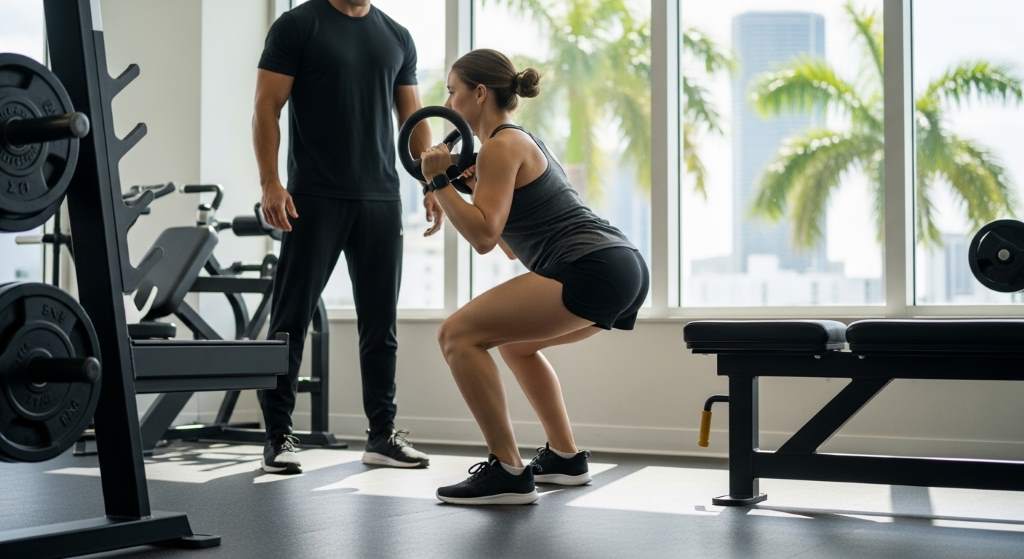
Many beginners in Miami start lower body training with excitement, but knee pain often slows progress within a few weeks. Research shows that nearly 25% of adults experience knee discomfort during exercise routines, especially when form and recovery habits stay inconsistent. New gym members also struggle to understand safe movement patterns in humid climates like South Florida. Learning proper workout structure matters more than lifting heavy weights too early. Beginners who understand leg press weight settings for beginners usually reduce unnecessary joint pressure and train with better confidence.
Why Knee Pressure Happens During Lower-Body Workouts
Knee pressure usually comes from poor movement mechanics rather than the workout itself. Many beginners place too much force on the knees while ignoring hip and ankle positioning. Miami gyms also stay crowded during peak hours, so rushed workouts often lead to sloppy exercise form. As a result, the knee joint absorbs stress that larger muscle groups should handle instead.
Weak glutes create another major issue for beginners. When the hips fail to stabilize the body, the knees shift inward during squats and lunges. Trainers often pair leg sessions with upper body balance work like iso lateral row for stronger posture support and improved body alignment. This approach reduces instability during heavy lower body exercises. Better posture also helps beginners control movement speed more effectively.
Miami’s hot and humid weather adds another challenge during intense workouts. Excessive sweating can reduce grip and balance, especially during weighted movements. Beginners often fatigue faster in warm conditions and compensate with poor posture. Consequently, knee strain increases during repetitive sets and high-volume routines.

Start With Proper Warm-Ups Before Heavy Training
A good warm-up prepares muscles and joints for pressure before lifting starts. Beginners should spend at least ten minutes activating the hips, hamstrings, and calves before heavy lower body work. Dynamic stretches improve blood flow and reduce stiffness around the knees. This simple habit often prevents painful movement patterns later in the workout.
Walking lunges without weight help improve mobility and balance before resistance training begins. Bodyweight squats also teach beginners how to control knee tracking during movement. In Miami, outdoor warm-ups work well during cooler morning hours because the body loosens naturally in warm air. However, midday heat can increase dehydration, so indoor preparation often becomes safer.
Many beginners ignore ankle mobility during warm-ups, but tight ankles increase knee stress significantly. Limited ankle movement forces the knees forward during squats and step exercises. Foam rolling the calves and Achilles area improves flexibility before training sessions. Better ankle mobility also improves overall lower body mechanics.
Use Correct Footwear for Joint Protection
Shoes affect lower body alignment more than most beginners realize. Running shoes with soft cushioning sometimes reduce stability during strength training sessions. Flat training shoes usually provide better ground contact and improve movement control. Stable footing helps distribute weight evenly across the lower body.
Miami beginners often train in lightweight shoes because of the warm climate and sweaty conditions. Breathable footwear reduces discomfort during longer gym sessions and outdoor workouts. Many athletes also prefer lightweight running shoes women choose for flexible movement and lower fatigue. Still, beginners should prioritize support and stability over style.
Worn-out shoes increase joint stress because they fail to absorb impact correctly. Beginners should replace training shoes regularly if the soles lose firmness or balance. Even slight instability affects squat depth and stepping mechanics during workouts. Strong foot positioning creates safer movement patterns for the knees.
Master Technique Before Increasing Weight
Beginners often rush into heavy lifting because social media promotes fast progress and intense workouts. Unfortunately, adding weight too early creates compensation patterns that overload the knees. Controlled movement should always come before resistance increases. Proper form allows muscles to share pressure evenly throughout each exercise.
Squats require the hips to move backward while the chest stays upright. Many beginners push the knees too far forward and place excessive strain on the joint. Trainers in Miami frequently teach box squats first because they improve body awareness safely. Learning movement control first reduces injury risk later.
Leg presses also create knee discomfort when beginners lower the platform too deeply. Excessive depth rounds the lower back and shifts pressure into the knees. Moderate range of motion usually works best during the first few months of training. Controlled repetitions protect the joints while building strength gradually.
Deadlifts strengthen the posterior chain and reduce knee dominance during lower body workouts. However, beginners must keep the spine neutral and avoid jerking the weight upward. Proper hip engagement protects the knees by transferring force into stronger muscle groups. Slow progression always produces better long-term results.
Focus on Glute and Hamstring Strength
Strong glutes stabilize the pelvis and reduce knee collapse during movement. Beginners who only train quads often develop muscular imbalances that increase joint stress. Adding glute bridges and Romanian deadlifts improves lower body balance effectively. These exercises also enhance power production during squats and lunges.
Hamstrings act like natural support systems for the knees during athletic movement. Weak hamstrings force the knees to absorb extra pressure during heavy lifting sessions. Resistance band curls and stability ball exercises help beginners strengthen this area safely. Consistent posterior chain training reduces injury risk over time.
Miami beginners who train outdoors often benefit from hill walking for glute development. Incline walking activates the hips without creating harsh impact on the knees. Early morning sessions also help athletes avoid excessive heat exposure. This simple method improves endurance while protecting sensitive joints.
Control Workout Volume and Weekly Frequency
Too much volume creates unnecessary fatigue and poor recovery. Beginners often train legs several times weekly because they want faster results. However, muscles and joints need recovery time to adapt safely. Overtraining commonly causes soreness that changes movement quality and increases knee stress.
Two focused lower body workouts per week usually work well for most beginners. Each session should include compound movements, mobility work, and recovery exercises. Shorter sessions with better intensity often outperform long workouts filled with random exercises. Quality always matters more than quantity during strength development.
Beginners should also track soreness levels after workouts. Persistent knee discomfort usually signals excessive volume or poor exercise execution. Reducing repetitions temporarily often improves recovery without slowing progress completely. Smart adjustments help beginners stay consistent with training.
Use Recovery Strategies That Work in Miami’s Climate
Recovery becomes harder in Miami because humidity increases fatigue and fluid loss. Beginners who ignore hydration often experience tighter muscles and reduced joint mobility. Drinking water consistently before and after workouts improves tissue recovery significantly. Electrolyte balance also supports muscle performance during hot weather training.
Cooling strategies matter more in warm climates than many beginners realize. Ice packs, cold showers, and cooling towels help reduce inflammation after demanding leg workouts. Athletes who understand how proper cooling improves recovery often maintain healthier joints during intense training periods. Effective cooling also improves energy levels for future workouts.
Sleep quality directly affects joint recovery and muscle repair. Beginners who sleep less than seven hours often experience slower recovery and lingering soreness. Miami’s nightlife culture sometimes interferes with consistent sleep schedules for young athletes. Better recovery habits usually produce stronger performance and healthier knees.
Exercises Beginners Should Avoid Initially
Some exercises place high pressure on the knees when beginners lack strength and coordination. Jump squats and deep plyometric drills create excessive impact during early training stages. Heavy walking lunges with poor balance also increase joint instability quickly. Beginners should build foundational strength before attempting advanced movements.
Smith machine squats sometimes force unnatural movement patterns for inexperienced lifters. Fixed bar paths limit natural joint positioning and increase knee stress for some body types. Free weight exercises usually allow better movement freedom and muscular coordination. Trainers often recommend simpler variations during the beginner phase.
Long-distance running on hard pavement can also irritate the knees for new athletes. Miami sidewalks and concrete surfaces create repetitive impact stress during cardio sessions. Cycling, swimming, and incline walking often provide safer alternatives during the first months of training. Lower impact methods protect joints while improving endurance.
An Uncommon but Effective Strategy: Sand Training for Stability
Miami offers a unique advantage that many fitness blogs rarely discuss properly. Beach sand workouts improve lower body stability while reducing harsh impact on the knees. Soft surfaces challenge stabilizer muscles and force better balance during movement. Beginners who train carefully on sand often improve coordination faster.
Bodyweight squats, walking drills, and resisted band exercises work especially well on sand. The unstable surface activates smaller muscles around the hips, ankles, and knees naturally. This type of training improves joint awareness without heavy external resistance. Better stabilization often translates into safer gym performance later.
Beginners should still approach sand workouts carefully because instability increases muscle fatigue quickly. Short sessions of twenty minutes usually provide enough challenge for joint-friendly conditioning. Morning beach workouts also reduce heat exposure and improve comfort during exercise. Miami’s environment creates an excellent opportunity for this overlooked strategy.
Nutrition Habits That Support Healthy Knees
Nutrition affects joint health more than many beginners expect. Processed foods and excessive sugar can increase inflammation around sensitive joints. Balanced meals with lean protein, vegetables, and healthy fats support tissue repair effectively. Consistent nutrition also improves workout performance and recovery speed.
Collagen-rich foods may help support connective tissue strength over time. Bone broth, fish, citrus fruits, and berries provide nutrients that assist recovery naturally. Miami’s fresh seafood markets offer many healthy options for active beginners. Simple dietary improvements often support better long-term joint comfort.
Maintaining a healthy body weight also reduces chronic knee pressure significantly. Even small reductions in body fat lower stress on the joints during movement. Beginners should combine strength training with moderate cardio for sustainable results. Consistency always produces stronger outcomes than extreme dieting methods.
Conclusion
Beginners in Miami can avoid knee pressure during heavy lower body workouts by focusing on technique, recovery, and smart progression. Stable footwear, controlled movement, and strong posterior chain muscles all play major roles in joint protection. Climate-specific habits like hydration and cooling strategies also improve workout safety in South Florida conditions. Resources explaining proper cooling improves indoor recovery can further support healthy training routines. Start slowly, stay consistent, and prioritize movement quality if you want stronger legs without chronic knee discomfort.
FAQs
Can beginners squat safely without knee pain?
Yes, beginners can squat safely by using proper form, moderate weight, and controlled movement.
How often should beginners train legs each week?
Most beginners benefit from two focused lower body workouts weekly with adequate recovery time.
Does Miami heat affect workout recovery?
Yes, high humidity and heat increase dehydration and fatigue, which can slow muscle recovery.
Are knee sleeves necessary for beginners?
Knee sleeves may provide support, but proper exercise technique matters much more initially.
What cardio works best for sensitive knees?
Cycling, swimming, and incline walking usually create less knee stress than running on concrete.


