
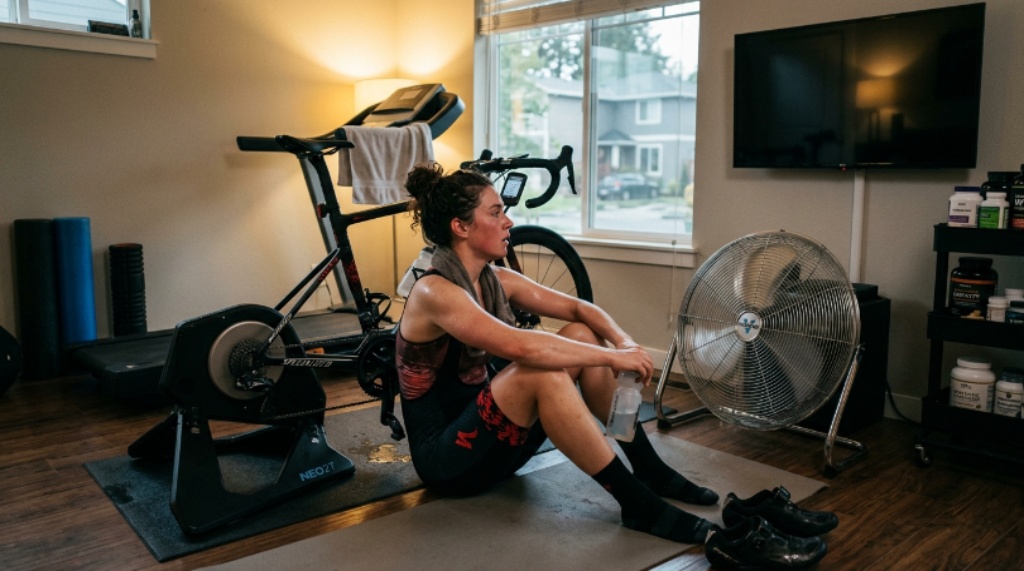
Most cyclists focus heavily on the ride itself. They track power output, monitor heart rate, and plan every interval with care. However, what happens in the minutes and hours after the ride is just as important as the session itself. Recovery is where your body actually gets stronger, and cooling plays a central role in how well that process works.
When you finish an indoor cycling session, your body is in a stressed state. Your core temperature is elevated, your muscles are flooded with metabolic waste, and your cardiovascular system is still working hard. How quickly and effectively you bring your body back to a rested state determines how well you recover and how ready you are for your next session.
This article explains exactly how proper post workout cooling supports recovery, reduces soreness, and helps you get back on the bike feeling fresh.
What Happens to Your Body at the End of a Hard Ride
To understand why cooling matters, it helps to know what is happening inside your body the moment you stop pedalling.
During intense cycling, your muscles produce heat as a byproduct of energy generation. Your heart pumps blood to the skin surface to help radiate that heat outward. Your sweat glands release fluid to accelerate cooling through evaporation. This system works hard during exercise, but it does not switch off the instant you stop.
Your core temperature remains elevated for several minutes after you finish. Blood is still pooled in your extremities. Lactic acid and other metabolic byproducts are still circulating in your muscles. Your heart rate stays high as your body works to restore balance.
Additionally, indoor cycling makes this process harder than outdoor riding. Without natural airflow, the heat your body generated during the session lingers in the room and on your skin. Therefore, actively helping your body cool down is not just comfortable. It is a meaningful part of your training strategy.
The Link Between Heat and Delayed Recovery
Elevated body temperature after exercise is a well-documented barrier to recovery. When your core temperature stays high for too long, several things happen that work against you.
Inflammation increases. Some post-exercise inflammation is normal and even useful, as it signals the body to repair muscle tissue. However, excessive or prolonged inflammation slows that repair process and leads to more intense muscle soreness.
Sleep quality suffers. Your body drops its core temperature naturally as part of the sleep onset process. If you are still holding excess heat from a late evening ride, that process is disrupted. You may find it harder to fall asleep, and the quality of your deep sleep, which is when most physical recovery occurs, is reduced.
Fatigue persists longer. Cyclists who skip proper cooling often feel heavier and more sluggish in the 24 hours following a hard session. Getting post workout cooling right helps clear the physical sensations of tiredness faster and leaves you feeling more capable the next day.
Active Cool-Down Riding: The First Step in Recovery
The transition from hard effort to full rest should never be abrupt. Stopping suddenly after an intense interval or a long endurance ride puts unnecessary stress on your cardiovascular system and slows the recovery process.
Instead, finish every session with five to ten minutes of very easy pedalling. Keep your cadence relaxed and your resistance low. This active cool-down serves several purposes at once.
It keeps your blood moving through your muscles, which helps flush out lactic acid and other waste products faster than if you simply stopped. It gradually lowers your heart rate rather than causing a sharp drop. Additionally, it gives your cardiovascular system a gentle transition back to a resting state, which reduces the risk of dizziness or lightheadedness that can follow a sudden stop after intense effort.
Think of this cool-down ride as the beginning of your recovery, not the end of your workout. It is not wasted time. It is one of the most productive things you can do in those final minutes.
Fan Cooling During and After Your Session
One of the most effective tools for cycling fatigue reduction is a well-placed fan used consistently throughout and after your ride. Fans are not just for comfort. They play an active role in the physiology of recovery.
During your cool-down ride, keep your fan running at full speed and aimed directly at your chest and face. This maintains the evaporative cooling your body has been relying on throughout the session. Turning the fan off the moment you stop pedalling removes that support at the exact moment your body still needs it most.
After you stop cycling entirely, sit in front of the fan for an additional five to ten minutes. Let your breathing fully settle and your heart rate come down to near-resting levels. This extended fan time supports the final stages of cardiovascular recovery and helps bring your skin temperature down more efficiently.
A ceiling fan running simultaneously in the room moves warm air away from the ceiling and lowers the ambient temperature, making the entire space more conducive to recovery. Small adjustments like this compound over time into meaningfully better training outcomes.

Cold Water and Its Role in Cooling the Body Down
Water is one of the simplest and most powerful recovery tools available. Used correctly after an indoor cycling session, it accelerates temperature reduction and supports the processes your body needs to repair itself.
Start by drinking cold water as soon as you finish your cool-down ride. Cold water does more than replace fluid lost through sweat. It helps lower your internal temperature from the inside. Drink 400 to 600 millilitres in the first 20 minutes after finishing. If your session was particularly long or intense, add an electrolyte mix to replace the sodium and potassium your body lost through heavy sweating.
Beyond drinking, cold water applied externally works fast. Run cold water over your wrists and forearms for 60 to 90 seconds. Major blood vessels sit very close to the skin in these areas, and cooling them sends cooled blood back to your core quickly. You will feel the effect within moments.
A cool shower taken 15 to 20 minutes after finishing your session delivers the most complete cooling benefit. Lukewarm is perfectly effective if cold feels too uncomfortable. The goal is to lower your skin temperature gradually and allow your body to complete its natural cooling process without the added burden of a hot or even warm shower.
Compression and Elevation After Cycling
Cooling is not just about temperature. It also involves managing the fluid shifts that occur during exercise. After a hard ride, blood and inflammatory fluid can pool in the legs, contributing to the heavy, tired feeling that follows intense indoor training.
Compression garments, such as calf sleeves or full-length compression tights, help move that fluid back toward the heart and reduce swelling in the muscles. Put them on within 30 minutes of finishing your session and wear them for at least 60 to 90 minutes. The combination of compression and a cooled environment produces noticeably faster recovery in most cyclists.
Elevating your legs against a wall for 10 to 15 minutes is another simple and effective technique. It uses gravity to drain fluid from your legs passively. Combined with cooling, it is one of the best things you can do in the half hour after an intense session. Additionally, it requires no equipment and costs nothing.
Nutrition Timing and Its Connection to Cooling
What you eat after your ride also interacts with your cooling and recovery process. Your muscles need protein and carbohydrates to repair and refuel, but consuming a large, hot meal immediately after training can slow the cooling process and cause digestive discomfort when your body is still managing elevated temperatures.
Instead, start with something cold and easy to digest. A protein shake made with cold water or milk, a cold Greek yogurt with fruit, or a chilled smoothie gives your muscles the nutrients they need without adding heat burden to your body. These options also tend to be quicker to prepare, which means you can eat sooner after finishing, when your muscles are most receptive to nutrients.
Wait 30 to 45 minutes before eating a full, warm meal. By that point, your temperature will have normalized, your digestive system will be functioning optimally, and you will be able to absorb nutrients more efficiently.
Sleep as the Final Stage of Recovery Cooling
No recovery strategy is complete without adequate sleep. Your body releases growth hormone during deep sleep, repairs damaged muscle tissue, and restores glycogen stores. All of these processes are more effective when your core temperature is properly managed in the hours before and during sleep.
Your body naturally lowers its core temperature as you fall asleep. Helping this process along by keeping your bedroom cool, between 16 and 19 degrees Celsius, shortens the time it takes to fall asleep and increases the proportion of deep, restorative sleep you get.
If you train in the evening, finish your cool-down and shower at least 90 minutes before your intended sleep time. This gives your body enough time to complete its natural temperature drop and enter sleep in an optimal physiological state. Avoid hot baths or heavy meals in this window, as both delay the cooling process and push back your sleep onset.
Conclusion
Recovery is not passive. It is an active process that begins the moment your session ends, and cooling is at the centre of it. An effective cool-down ride, consistent fan use, cold water inside and out, compression, smart nutrition timing, and a cool sleep environment all work together to accelerate how quickly your body bounces back.
Post workout cooling is one of the most underused tools in a cyclist’s recovery toolkit. Cycling fatigue reduction does not require expensive equipment or complicated protocols. It requires consistency, attention to what your body needs after a hard effort, and the discipline to do the simple things well.
Build these habits into your routine after every indoor session. Over weeks and months, the cumulative effect will be shorter recovery windows, less soreness, and a body that is more consistently ready to perform.
Frequently Asked Questions
How long should I spend cooling down after an indoor cycling session?
A full cool-down should take 15 to 25 minutes. This includes five to ten minutes of easy pedalling, five to ten minutes sitting in front of a fan, and a cool shower. Rushing this process delays recovery and increases the risk of prolonged muscle soreness.
Is a cold shower really better than a warm one after cycling?
Cool or lukewarm showers are more effective than hot ones for recovery purposes. Hot water raises your skin temperature and delays the cooling process your body is trying to complete. Cold water also helps reduce inflammation in muscles, particularly after hard interval sessions.
Do compression tights actually help with cycling recovery?
Yes. Compression garments reduce fluid pooling in the legs, limit swelling in exercised muscles, and support faster clearance of metabolic waste products. They are most effective when worn within 30 minutes of finishing and kept on for at least one to two hours.
Should I eat before or after my post-ride cool-down?
After. Your body needs to complete the initial cooling and cardiovascular recovery process before digestion becomes efficient. Start with a cold, easily digestible snack within 30 minutes of finishing, then eat a fuller meal once your temperature has normalized, typically 30 to 45 minutes later.
How does poor post-ride cooling affect the next day’s training?
Skipping proper cooling leads to higher residual inflammation, slower muscle repair, and disrupted sleep. These factors combine to leave you feeling heavier and more fatigued the following day. Over time, consistently poor recovery shortens the number of quality sessions you can complete each week.


