
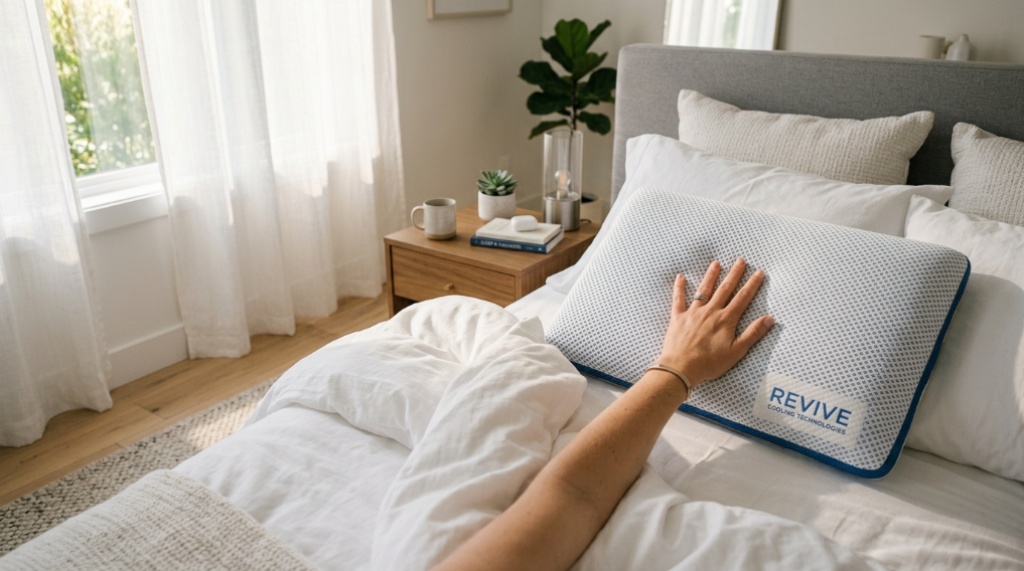
Waking up with a sweaty neck or constantly flipping your pillow to find the cool side is a frustrating way to start the day. Your pillow’s material determines whether it traps heat against your head or actively wicks it away, which directly impacts how quickly you fall asleep and how deeply you stay asleep. The right choice depends on your sleeping position, your body temperature, and whether you tend to sleep hot or cold. If you are exploring specific cooling pillow options for a larger bed, you might check it out to see how different constructions compare in real-world use. Understanding what is inside your pillow is the first step toward a more comfortable night.
Quick Answer
Pillow materials affect temperature primarily through breathability, heat retention, and moisture management. Memory foam traps heat and sleeps warm, while latex, down, wool, and gel-infused or phase-change materials sleep cooler. Shredded memory foam, buckwheat hulls, and polyester fiberfill offer more airflow than solid foam blocks. For hot sleepers, choose a pillow with open-cell structure, natural fibers like cotton or wool covers, or a dedicated cooling layer such as gel or phase-change material. Your sleep position also matters, since stomach sleepers need thinner, cooler pillows while side sleepers require thicker support that may trade some cooling for alignment.
Key Takeaways
- Memory foam is the warmest common pillow material because its dense structure traps body heat and restricts airflow.
- Latex, especially talalay latex, provides better breathability than memory foam while still offering contouring support.
- Natural fills like down, wool, and buckwheat hulls naturally regulate temperature better than synthetic foam alternatives.
- Cooling technologies such as gel infusions, phase-change materials, and copper or graphite additives help but do not replace the need for breathable base materials.
- Your sleeping position and body temperature should guide material selection more than marketing claims about “cooling” features.
Why Pillow Material Matters for Temperature Regulation
Your head and neck are highly vascular areas that release a significant amount of body heat during sleep. When a pillow material traps that heat, your core temperature rises, which can delay the onset of deep sleep and cause night waking. The ideal pillow material allows heat to escape while wicking moisture away from your skin.
The key factors that determine how a pillow material performs thermally are:
- Density and structure: Dense solid materials like memory foam block airflow, while open-cell or shredded structures allow heat to escape.
- Moisture wicking: Materials that pull sweat away from your skin keep you drier and cooler.
- Thermal conductivity: Some materials naturally conduct heat away from your body faster than others.
- Air circulation: Pillows with channels, perforations, or loosely packed fills permit better air movement.
These factors work together. A pillow with a breathable cover but a dense foam core will still sleep warm because the core traps heat. Conversely, a breathable material like latex can still feel warm if the cover is made from non-breathable synthetic fabric, For more morning hair protection tips while you rest, check our guide on how to sleep with long hair to prevent breakage.
Comparison of Common Pillow Materials by Temperature
The table below summarizes how the most common pillow materials perform in terms of heat retention, breathability, and overall temperature regulation.
| Material | Heat Retention | Breathability | Moisture Wicking | Best For |
|---|---|---|---|---|
| Memory Foam | High | Poor to Moderate | Poor | Side sleepers who need firm support and do not sleep hot |
| Shredded Memory Foam | Moderate | Moderate | Moderate | Those who want foam support with better airflow |
| Latex | Low to Moderate | Good | Good | Hot sleepers who still want contouring support |
| Down | Low | Excellent | Good | Back and stomach sleepers who prefer soft, cool pillows |
| Wool | Low | Excellent | Excellent | Temperature-sensitive sleepers in variable climates |
| Buckwheat Hulls | Very Low | Excellent | Good | Sleepers who want maximum airflow and firm support |
| Polyester Fiberfill | Moderate | Good | Moderate | Budget-conscious sleepers who want a soft, cool feel |
| Gel-Infused Foam | Moderate | Moderate | Moderate | Memory foam lovers who want a cooler surface feel |
This comparison shows that no single material is universally best. The right choice depends on your priorities for support, softness, and temperature regulation.
Memory Foam: The Warmest but Most Supportive
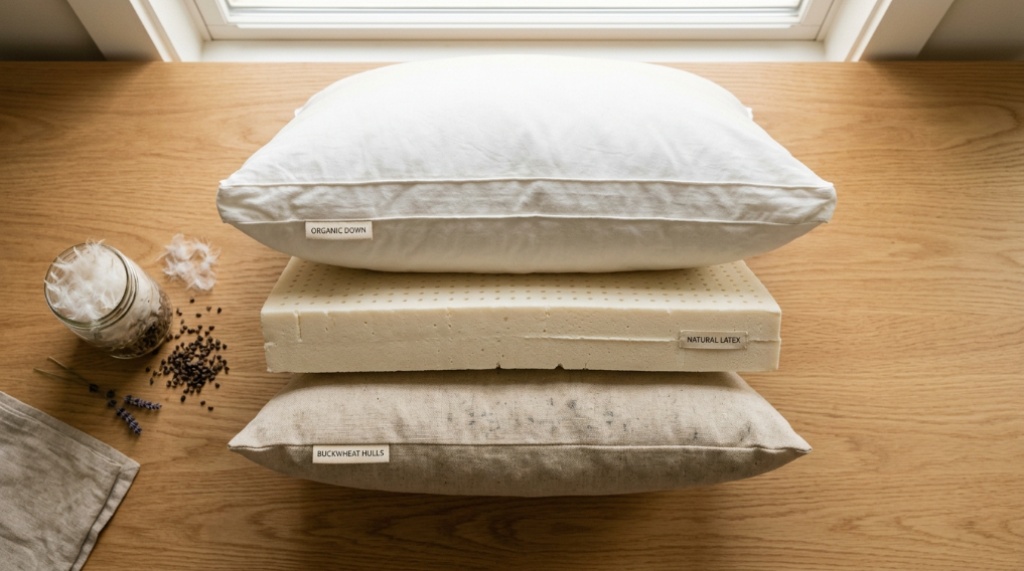
Memory foam is popular because it contours precisely to your head and neck, providing excellent pressure relief and spinal alignment. However, its dense viscoelastic structure is the primary reason it sleeps hot. The foam traps body heat, and because it molds to your shape, it minimizes the air gap between your head and the pillow surface, further reducing airflow.
If you prefer memory foam but struggle with heat, consider these alternatives:
- Shredded memory foam: The shredded pieces create air pockets that allow better circulation than a solid block.
- Gel-infused memory foam: Gel beads absorb heat initially but become warm once they reach body temperature. The effect is temporary.
- Open-cell memory foam: Some manufacturers use a more porous foam structure that improves breathability while maintaining contouring properties.
- Copper or graphite-infused foam: These additives increase thermal conductivity, helping draw heat away from your head, though the effect is modest.
The trade-off is that more breathable versions of memory foam often provide slightly less pressure relief than dense traditional foam. If you have neck pain, you may need to choose between maximum contouring and cooler sleep.
Latex: The Balanced Cooler Alternative
Latex pillows offer a middle ground between memory foam and natural fills. Latex provides responsive support without the “sinking” sensation of memory foam, and its open-cell structure allows significantly better airflow. Talalay latex, which is whipped and poured to create a lighter, more airy texture, sleeps cooler than Dunlop latex, which is denser and firmer.
Latex also naturally resists dust mites and mold, making it a good option for allergy sufferers. Its durability is excellent, often lasting five to eight years, which is longer than most foam pillows. The main downside is cost, as natural latex pillows are among the most expensive options available.
For hot sleepers who need firm support, latex is often the best material choice. It provides enough structure for side sleeping while allowing heat to dissipate throughout the night.
Natural Fills: Down, Wool, and Buckwheat
Natural fill materials generally outperform synthetic foams in temperature regulation because they allow air to move freely through the pillow.
Down and Feathers
Down clusters trap air, creating natural insulation that adapts to your body temperature. In warm conditions, down allows excess heat to escape; in cool conditions, it retains warmth. This makes down pillows comfortable year-round for many sleepers. However, down pillows are soft and compress easily, so they may not provide enough support for side sleepers. Feather pillows, which use firmer feathers, offer more structure but can poke through the fabric over time.
Wool
Wool is a remarkable temperature-regulating material. It naturally wicks moisture away from your skin and releases heat when you are warm while insulating when you are cool. Wool pillows are also naturally flame-resistant and resistant to dust mites. The main drawback is that wool pillows can feel firm and dense, which some sleepers find uncomfortable.
Buckwheat Hulls
Buckwheat hull pillows are filled with hard, hulled seeds that create a breathable, supportive surface. Air flows freely between the hulls, making these among the coolest pillows available. They also conform to your head and neck while providing firm support. However, buckwheat pillows are heavy, noisy, and have a distinct feel that takes time to adjust to. They also require periodic topping up as the hulls break down.
Cooling Technologies: Do They Actually Work?
Many pillow manufacturers add cooling features to standard materials, but their effectiveness varies considerably.
Gel infusions are the most common cooling addition to memory foam. Gel beads absorb heat from your head initially, creating a cool surface feel. However, once the gel reaches body temperature, it stops providing any cooling benefit. The effect typically lasts 15 to 30 minutes.
Phase-change materials (PCMs) work differently. These materials absorb, store, and release heat as they change from solid to liquid and back. PCMs maintain a consistent temperature at the pillow surface, actively pulling heat away from your head throughout the night. This technology is more effective than simple gel infusions but also more expensive.
Copper and graphite additives increase the thermal conductivity of foam, helping heat move away from your skin. These materials do provide a measurable cooling effect, though it is less dramatic than marketing claims suggest.
The most important consideration is that cooling technologies cannot compensate for a fundamentally non-breathable base material. A gel-infused memory foam pillow still traps heat in its dense foam core. For the best results, combine a breathable base material like latex or shredded foam with a cooling cover made from cotton, bamboo, or a moisture-wicking synthetic fabric.
Choosing the Right Pillow Material for Your Sleep Position
Your sleeping position determines the loft and firmness you need, which in turn affects which materials will work best for you.
Side sleepers need a thicker, firmer pillow to fill the space between their ear and shoulder. Memory foam and latex are the best options because they provide the necessary support. If you sleep hot, choose latex or shredded foam over solid memory foam.
Back sleepers need medium loft and firmness to maintain the natural curve of their neck. Down, wool, and latex all work well. A down pillow offers a soft, cool surface, while latex provides more structure.
Stomach sleepers need a very thin, soft pillow to avoid straining their neck. Down, polyester fiberfill, and buckwheat hulls are all suitable. These materials allow you to sleep nearly flat while still providing a small amount of cushioning.
If you change positions during the night, a shredded memory foam or latex pillow is often the best compromise because they provide support while remaining breathable.
Frequently Asked Questions
What pillow material stays coolest all night?
Buckwheat hulls and wool are the coolest pillow materials because they allow maximum airflow and naturally wick moisture. Latex is the coolest supportive material, making it a better choice for side sleepers who need more structure.
Does gel memory foam actually sleep cooler than regular memory foam?
Gel-infused memory foam feels cooler at first touch, but the cooling effect diminishes once the gel reaches body temperature. The dense foam core still traps heat, so gel memory foam only provides a temporary improvement over regular memory foam.
Are down pillows good for hot sleepers?
Yes, down pillows are excellent for hot sleepers because the down clusters trap air and allow heat to escape. Down is breathable and lightweight, though it may not provide enough support for side sleepers.
How long do cooling pillows last?
Latex pillows last the longest, typically five to eight years. Memory foam pillows last three to five years before losing their shape and support. Down pillows may last five to ten years if properly fluffed and maintained.
Can a pillow cover make my pillow cooler?
Yes, a breathable cover made from cotton, bamboo, or Tencel can improve airflow and moisture wicking. However, a cover cannot overcome a pillow core that traps heat. The base material matters more than the cover.
Conclusion
The material inside your pillow is the single most important factor in determining whether you sleep hot or cool. Memory foam offers the best contouring but the worst temperature regulation, while natural fills like down, wool, and buckwheat provide superior airflow with different trade-offs in support. Latex remains the best all-around choice for hot sleepers who need firm support. When evaluating any pillow, look beyond marketing claims about “cooling technology” and focus on the base material, its density, and its breathability. Matching the material to your sleep position and body temperature will do more to improve your sleep comfort than any single cooling feature.


